
Jump to:
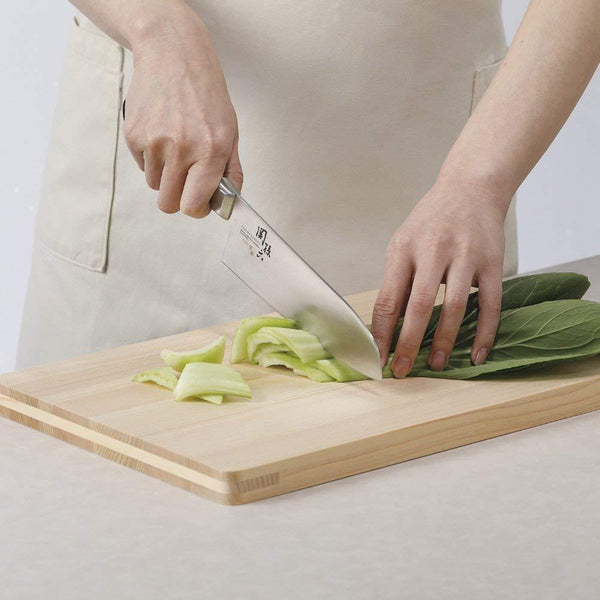
Santoku knife is an all-purpose Japanese kitchen knife that has the features of both the Japanese nakiri vegetable knife and the Western chef knife combined into one. Santoku literally means “three virtues”, and technically refers to three variations of food (meats, fish, and vegetables) or cutting methods (slicing, dicing, and mincing), which indicates its versatility and convenience. The Santoku knife is a standard item of kitchenware in Japanese households, and it can handle almost all cutting tasks without requiring the use of other types of knives. Other Japanese knives are usually single-purpose, if you'd like to learn more about them you can read about them here.
Regarding its appearance, although there are some exceptions, the tip is generally not as pointed as chef’s knives and gyuto knives. The edge runs straight and is usually parallel to the surface of the cutting board while its blade width is greater than its Western counterparts. These features allow you to easily shred or julienne food without exerting too much force.
How we decided
- Blade Material & SharpnessMolybdenum vanadium steel, VG10, Damascus steel, or other high-quality metals that ensure long-lasting sharpness
- Versatility & UseAbility to handle multiple kitchen tasks (meat, vegetables, fish) effectively
- Design & ErgonomicsComfortable, well-balanced handles, stylish appearance, and reduced hand fatigue
- Durability & MaintenanceCorrosion resistance, ease of sharpening, hygiene-friendly designs, and long-lasting construction
Japanese santoku knives are famous for their sharpness and durability. By owning one santoku knife, you can experience how smooth foods are cut. In this article, we would like to highlight 10 of the most recommended santoku knives available at our store.
Our recommendations
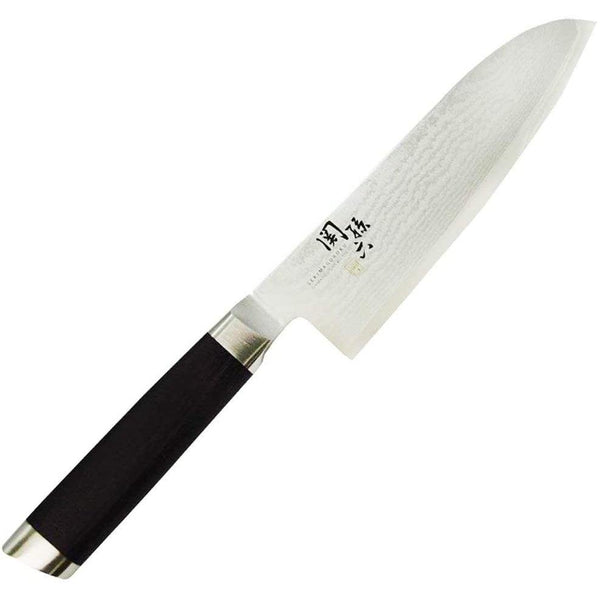
KAI Seki Magoroku Damascus Santoku Knife 165mm AE5200
The AE5200 Santoku Knife is one of the premium kitchen knives manufactured by the major Japanese cutlery brand Seki Magoroku. This is a 32-layered Damascus steel knife that achieves sharpness, toughness, and ability to sharpen at a high level. Its edge is specially sharpened to enhance cutting capacity with the manufacturer's traditional blade forging technique. Other features include excellent corrosion resistance, a triangular handle for a more comfortable grip and better control, a heavy-duty laminated wooden handle, and an integrated design to prevent the accumulation of dirt. If you don’t know which santoku knife to buy, consider this one first.
Pros
- Extremely sharp
- Durable Damascus steel
- Comfortable triangular handle
Cons
- Requires careful handling
- Heavier than some knives
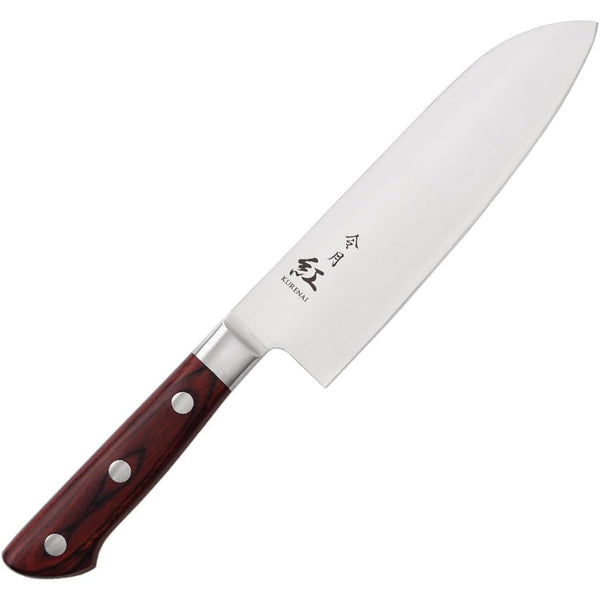
Kurenai Santoku Knife Molybdenum Vanadium 170mm
Fuji Cutlery Kurenai Santoku is a versatile, all-purpose Japanese knife perfect for slicing, dicing, chopping, and mincing. Made with ultra-sharp molybdenum vanadium steel and a corrosion-resistant stainless outer layer, it’s durable, easy to maintain, and lightweight to reduce hand fatigue. The stylish red laminated wood handle adds elegance, making it ideal for both home cooks and professionals.
Pros
- Molybdenum vanadium blade resists corrosion
- All‑purpose 170mm size
- Good everyday performance
Cons
- Not as sharp as premium steels
- Basic handle grip
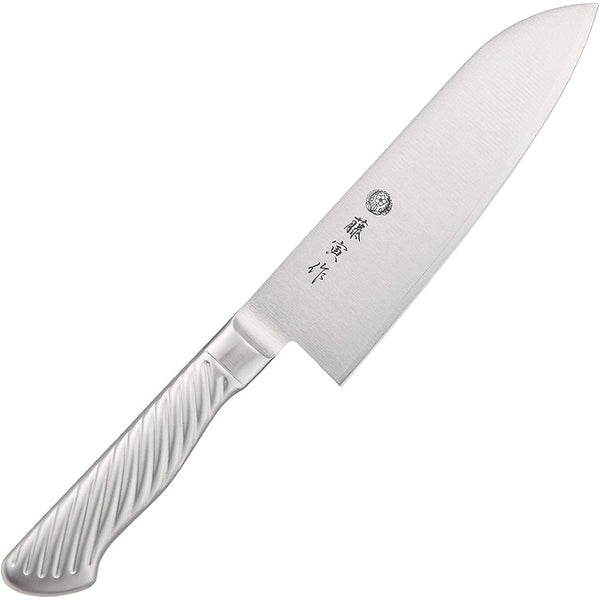
Tojiro Fujitora DP Cobalt All Metal Santoku Knife 170mm FU-895
Tojiro strives to produce Japanese kitchen knives that are “more than just sharpness”, and we think this santoku knife materializes their genuine craftsmanship. It is an all-metallic knife that aims to achieve both pro-class sharpness and easy maintenance. The blade is made of an alloy called DP Cobalt: its core material is extra-tough VG10 stainless steel, clad with 13-chrome stainless steel to give additional re-sharpening capacity. Its spiral-patterned handle is designed to prevent slippage even when you grip it with wet or greasy hands, and it is hollowed so you experience less fatigue when using the knife. The knife’s integrated design and its full-metallic body help to keep it hygienic.
Pros
- Full-metal hygienic design
- Sharp professional-grade edge
- Anti-slip handle
Cons
- Heavier metal feel
- Can be slippery if wet
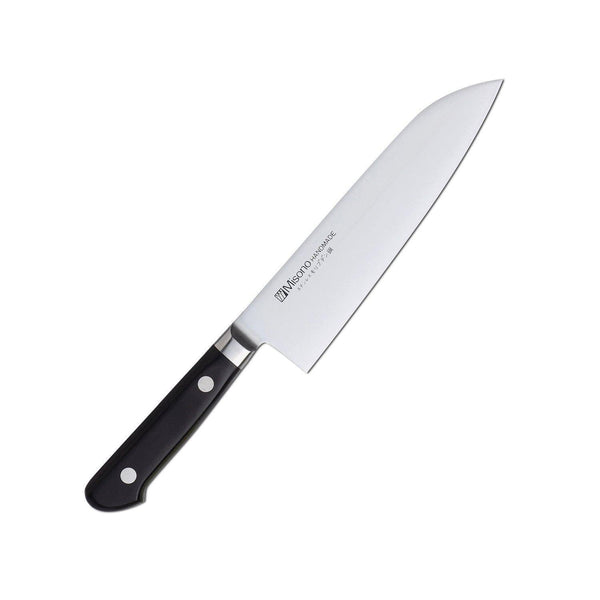
Misono Molybdenum Steel Santoku Knife 180mm No. 581
The things you can expect from Misono’s kitchen knives are quality and practicality. This santoku knife is a combination of high carbon premium 13-chrome, stainless steel, and molybdenum steel. As a result, it offers excellent resistance to abrasion and rust as well as long-lasting sharpness to facilitate maintenance. The blade and the handle are tightly integrated with a bolster, so you can easily keep this santoku knife hygienic. Unlike some classic Japanese kitchen knives, its double-edged blade is easy for anyone to use regardless of their dominant hand.
Pros
- Durable steel mix
- Rust & abrasion resistance
- Easy to use for all hands
Cons
- Plain design
- Slight weight
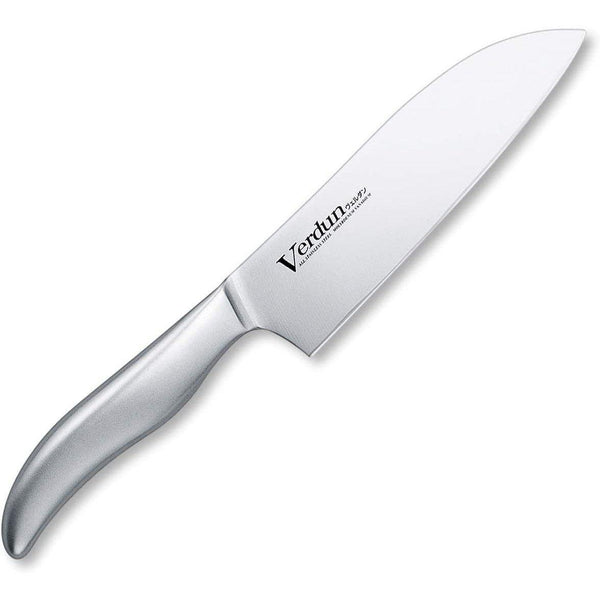
Shimomura Verdun Santoku Knife 165mm OVD-11
Even though most people would agree that sharpness is one of the most critical, if not the top-priority benchmark when choosing the best kitchen knives, some people may wish to own a knife with an elegant design. If you are also seeking both fine quality and design, the Verdun OVD-11 santoku knife is the one for you. Its streamlined look gives you a sense that it looks like a piece of art. Its cutting capacity is also noticeable because of its thin blade thickness. This also enhances the sharpness of the blade and makes it lighter. On top of these features, this santoku knife is also dishwasher safe.
Pros
- High quality steel
- Thin blade for precision
- Ideal all-purpose knife
Cons
- Not suitable for heavy-duty tasks
- Requires careful drying to avoid rust
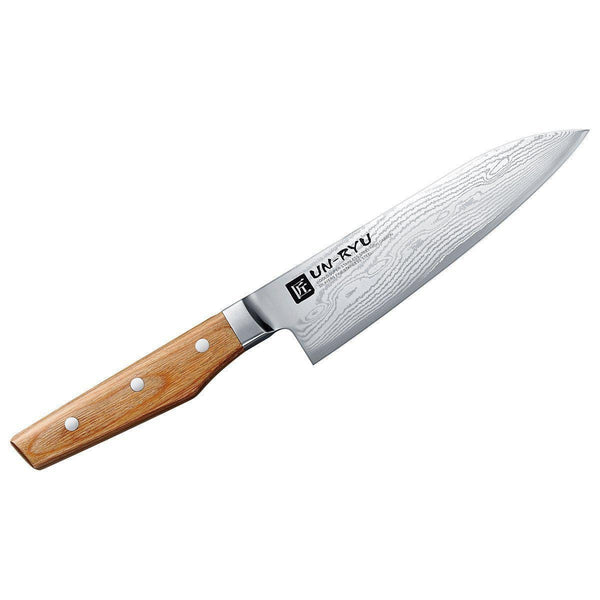
Shimomura Un-Ryu Santoku Knife 170mm UNR-01
The Un-Ryu UNR-01 santoku knife is the best one for consumers who prefer a tough blade that is free from dullness. It is made of cobalt-containing VG-10 stainless steel to achieve extraordinary resistance to abrasion, corrosion, and nicking. This means that as long as you do not cut tough foods very often, you can experience a sharpness that lasts virtually forever. Its design is another factor you should not miss: its wavy 33-layered Damascus pattern brings this product an aesthetic value while its natural-colored wooden handle has beautiful wood grain. Sealed with a bolster, you do not have to worry about it accumulating dirt.
Pros
- Long-lasting sharpness
- Elegant Damascus pattern
- Comfortable wooden handle
Cons
- Not suitable for heavy-duty tasks
- Not dishwasher safe
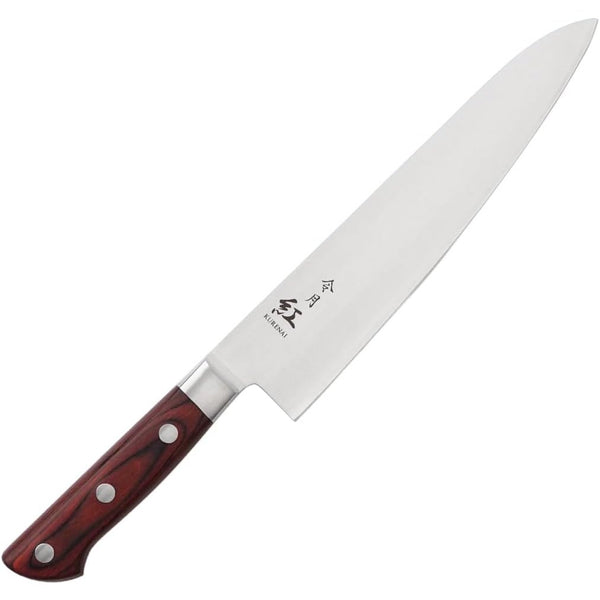
Kurenai Gyuto Knife Molybdenum Vanadium Japanese Chef Knife 210mm
Fuji Cutlery Kurenai Gyuto is a versatile chef’s knife ideal for slicing, dicing, chopping, and filleting. Its ultra-sharp molybdenum vanadium steel blade with a corrosion-resistant stainless layer ensures durability and precision. Lightweight and easy to handle, the knife features a stylish red laminated wood handle, making it perfect for both professional chefs and home cooks.
Pros
- Longer 210mm blade for large foods
- Molybdenum vanadium resists corrosion
- Multi‑purpose chef design
Cons
- Not a traditional Santoku
- Slightly heavier
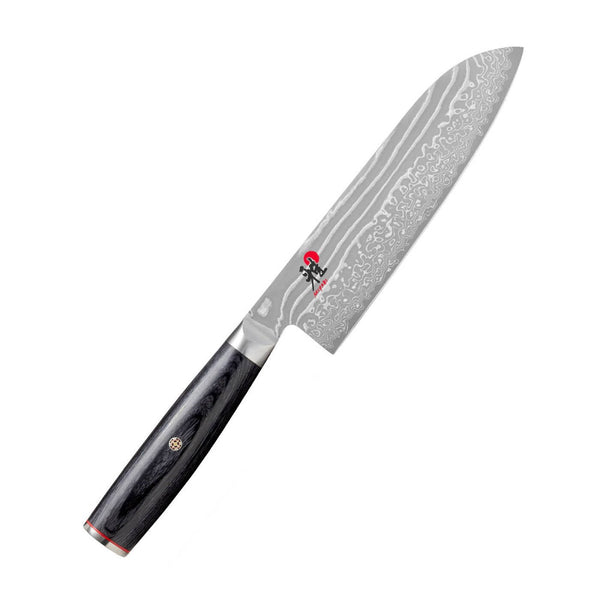
Miyabi 5000FC-D Damascus Steel Santoku Knife 180mm
Although this santoku knife is designed by German brand Zwilling J.A. Henckels, it is hand-forged by Japanese artisans, and it has three unique features that no other knives have. First, its blade is made of an extra-tough FC61 stainless steel with the manufacturer's original quenching to expand its lifespan. Secondly, an asymmetrical D-shaped handle provides a comfortable grip feel and accurate control of the blade. Last but not least, the mark printed on the handle and a brand logo on the blade and the end of the handle makes this knife look like a Japanese sword. In short, you can enjoy both quality and design from this product.
Pros
- FC61 steel with quenching
- Comfortable D‑shaped handle
- Stylish design
Cons
- Heavier feel
- Requires careful handling
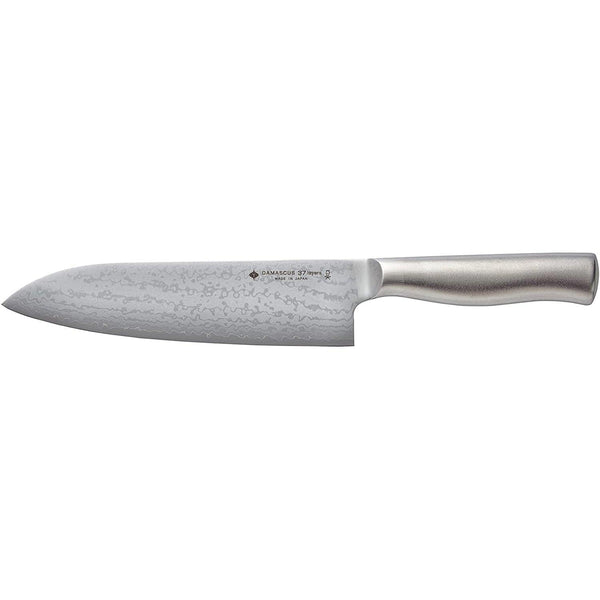
Sori Yanagi Japanese Stainless Steel Kitchen Knife 180mm
Like other products from Sori Yanagi brand, this full-metal santoku knife adopts a minimalist approach to offer the most basic features to consumers. The blade is hand-forged with a base material of molybdenum vanadium steel clad with 13-chrome stainless steel to prevent rust and breakage while ensuring fine sharpness. It also has an ideal weight balance between blade and handle; as a result, fatigue is minimum even though it is fully made of metals. Its curved handle is also convenient because it is carefully designed to reduce the risk of slippage.
Pros
- Balanced full‑metal build
- Simple functional design
- Corrosion resistant
Cons
- Not for heavy-duty tasks
- Needs proper cleaning and sharpening
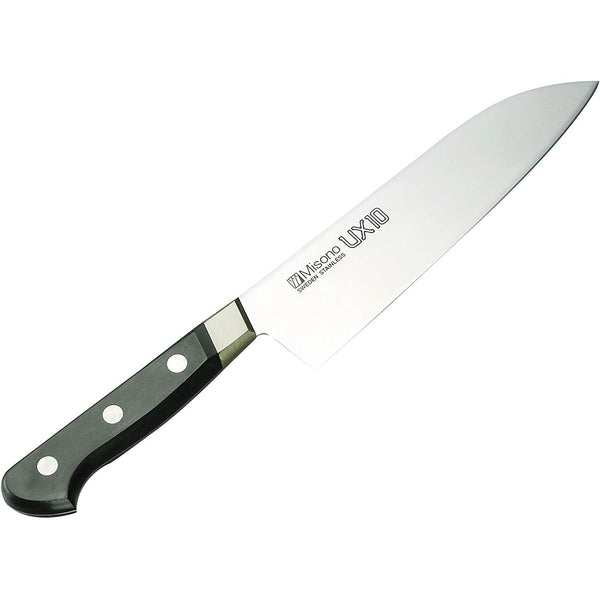
Misono UX10 EU Stainless Steel Santoku Knife 180mm No. 781
The UX10 series from a Japanese cutlery company Misono is one of our favorite santoku knives and is worth mentioning in this blog post. The blade is made with high-purity special stainless steel from Sweden. Although normal stainless steel is not as sharp as hagane (carbon steel), this Swedish steel is as sharp as hagane. This means you can enjoy its cutting capacity as if you were using a hagane kitchen knife. Even if the blade becomes dull after heavy use, it is not an issue because the blade is also designed to allow you to sharpen with ease.
Pros
- Made from high-purity Swedish stain-resistant steel
- Thinner edgeand superior cutting performance
- Retains its sharpness remarkably well
Cons
- Blade is quite thin and light
- Requires sharpening with whetstones