
Jump to:
Matcha and coffee are two of the world's most popular caffeinated drinks, but they offer different experiences. Coffee is known for its bold flavor and stronger caffeine kick, while matcha is valued for its combination of caffeine, L-theanine, and antioxidants.
Both contain plant compounds associated with health benefits, but which one is better for energy, concentration, heart health, and everyday consumption?
The answer depends on what you want from your daily drink. Here's how matcha and coffee compare in terms of caffeine, health benefits, taste, preparation, and price.
Matcha vs. Coffee: At a Glance
Got it! You want readers to understand what the terms mean, not just see shorter descriptions. I'd use simple, everyday language while keeping the important information.
|
Feature |
Matcha |
Coffee |
|---|---|---|
|
Made From |
Ground green tea leaves |
Roasted coffee beans |
|
Caffeine |
38–89 mg per serving (2 g) |
80–100 mg per cup (8 oz) |
|
Key Compounds |
Caffeine, L-theanine (an amino acid), and catechins (plant compounds) |
Caffeine, chlorogenic acids, and other plant compounds |
|
Antioxidants |
Contains EGCG, a compound that helps protect cells from damage |
Contains antioxidants that help protect cells from damage |
|
Energy and Focus |
May help you feel alert while supporting a calmer focus |
Helps you feel more awake and energized |
|
Taste |
Earthy, grassy, and slightly sweet |
Rich, roasted, and sometimes bitter or fruity |
|
Preparation |
Mixed with hot water using a whisk |
Made by brewing ground coffee with water |
|
Price |
Usually more expensive |
Usually cheaper |
Matcha vs. Coffee: 6 Key Differences

Caffeine Content: Which Has More?
Coffee generally contains more caffeine per serving than matcha, although the difference depends on how much you drink and how each beverage is prepared. Researchers measured 18.9 to 44.4 mg of caffeine per gram in matcha, compared with 11.3 to 24.67 mg in other green teas.
A typical 2-gram serving of matcha therefore provides approximately 38 to 89 mg of caffeine. An 8-ounce cup of brewed coffee typically contains around 80 to 100 mg of caffeine, while a single 1-ounce espresso shot averages approximately 63 mg.
This means a serving of matcha can contain less caffeine than a regular cup of coffee, but it may provide a similar amount to a shot of espresso.
The actual caffeine content varies depending on the amount of matcha powder used, the coffee beans, and the brewing method.
Which should you choose?
So, if you want a higher caffeine intake per serving, brewed coffee is generally the stronger option. If you prefer a more moderate caffeine dose, matcha may be a better fit.
Energy and Focus: Which Keeps You More Alert?
Both matcha and coffee can help improve alertness because they contain caffeine. The main difference is that matcha also contains L-theanine, an amino acid that may influence how caffeine affects the brain.
A 2017 review found that combining L-theanine with caffeine improved attention-switching and alertness while reducing some of caffeine's stimulating effects. This combination is why matcha is often associated with calm focus.
Coffee, on the other hand, is often preferred for its more noticeable caffeine boost. Its higher average caffeine content per serving can provide stronger stimulation, helping reduce tiredness and improve alertness.
However, matcha does not necessarily provide longer-lasting energy or prevent caffeine crashes. Individual responses depend on caffeine sensitivity, serving size, sleep, and other factors.
A Japanese study involving middle-aged and older adults also found that faster reaction times after consuming matcha were largely attributed to its caffeine content.
Which should you choose?
Coffee may give you a stronger energy boost, while matcha provides caffeine along with L-theanine, which may help you feel more focused and calm. Neither guarantees better concentration, and both can affect sleep if consumed too late in the day.
Health Benefits: Which Has More Antioxidants?
Matcha and coffee both contain antioxidants, but they have different types and concentrations of plant compounds.
Matcha: Catechins and EGCG
Matcha is particularly rich in catechins, a group of antioxidants found in green tea. Its most abundant and biologically active catechin is epigallocatechin gallate (EGCG).
Research suggests that green tea catechins may offer modest cardiovascular benefits. A 2020 meta-analysis involving 3,321 participants found that green tea consumption reduced LDL (bad) cholesterol by approximately 4.6 mg/dL and total cholesterol by 4.7 mg/dL. It did not significantly affect HDL (good) cholesterol or triglyceride levels.
Another Japanese study followed more than 40,000 adults for up to 11 years. Participants who drank five or more cups of green tea daily had a 31% lower risk of cardiovascular disease mortality than those who drank fewer than one cup.
However, this was an observational study, meaning it found an association rather than proving that green tea directly prevented cardiovascular disease.
Coffee: Chlorogenic Acids and Polyphenols
Coffee contains chlorogenic acids and other polyphenols, which are associated with several potential health benefits.
A 2017 umbrella review published in the British Medical Journal found that drinking three to four cups of coffee daily, compared with drinking none, was associated with the greatest relative risk reductions for all-cause mortality and cardiovascular disease.
The same review found associations between coffee consumption and lower risks of type 2 diabetes, Parkinson's disease, gout, and chronic liver disease.
However, these findings do not prove that coffee directly prevents these conditions. Much of the evidence comes from observational research, and more clinical trials are needed to establish cause and effect.
Which should you choose?
Both drinks provide beneficial plant compounds, but their antioxidant profiles are different. Matcha is a source of catechins, particularly EGCG, while coffee provides chlorogenic acids and other polyphenols.
There is not enough evidence to conclude that one is universally healthier than the other. Both may offer health benefits as part of a balanced diet.
Effects on the Body: Sleep, Anxiety, and Digestion
Although caffeine can improve alertness, too much can cause unwanted side effects. Both matcha and coffee contain caffeine, so either can affect people who are sensitive to stimulants.
Sleep and Anxiety
Coffee generally provides more caffeine per serving, which may make it more likely to cause jitters, restlessness, or difficulty sleeping when consumed in large amounts.
Matcha also contains caffeine, so it is not necessarily a better choice for people who are sensitive to it. Its L-theanine content may influence caffeine's stimulating effects, but it does not eliminate them.
If caffeine affects your sleep, consider reducing your intake or avoiding both drinks later in the day.
Digestion and Stomach Sensitivity
Coffee can cause stomach discomfort in some people, particularly when consumed on an empty stomach. Its acidity and other compounds may contribute to digestive discomfort, although individual responses vary.
Matcha is not automatically gentler on the stomach. Its caffeine and catechin content can also cause discomfort in sensitive individuals.
Neither drink is universally better for digestion. Your tolerance, serving size, and preparation method all matter.
Which should you choose?
If you experience jitters or sleep problems after drinking coffee, trying a smaller serving of matcha may help reduce your caffeine intake. However, if you are particularly sensitive to caffeine, reducing or avoiding both drinks may be more effective.
Taste and Preparation: Which Is Easier to Enjoy?
Matcha and coffee have distinct flavors and preparation methods, making each appealing to different preferences.
Taste and Flavor
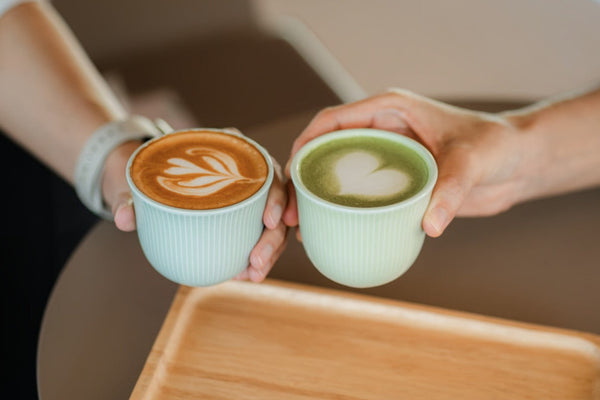
Matcha has a vibrant green color, a fine, slightly foamy texture, and a grassy, earthy taste with savory umami notes. Higher-quality matcha often has a more pronounced natural sweetness and less bitterness.
Coffee ranges from light brown to nearly black, depending on the roast and preparation. Its flavor can be fruity, nutty, chocolatey, acidic, or bitter. Darker roasts generally have more pronounced roasted flavors.
Both drinks are popular with milk and sweeteners. Matcha lattes have become particularly popular, while coffee is commonly served as cappuccinos, flat whites, and lattes.
Preparation Methods
Coffee offers several preparation methods, including drip brewing, espresso extraction, French press, pour-over, and cold brew. Each method produces a different flavor profile and can affect the final caffeine content.
Matcha traditionally requires sifting the powder into a bowl and whisking it with hot water using a bamboo whisk called a chasen. A milk frother can also be used for everyday preparation.
Although matcha requires a little more preparation than instant or machine-brewed coffee, it is particularly versatile in the kitchen. Beyond traditional tea, it can be added to smoothies, lattes, baked goods, ice cream, and other desserts.
Coffee is equally versatile as a drink, with countless brewing techniques and variations. However, matcha offers more opportunities to use the actual powder as a cooking ingredient.
Which should you choose?
Coffee may be more convenient if you rely on a coffee machine or instant coffee for your daily caffeine fix. Matcha is worth the extra preparation if you enjoy its flavor and want an ingredient you can also use in cooking and baking.
Price and Everyday Value: Which Is More Affordable?
Coffee is generally more affordable than matcha, particularly when comparing everyday coffee with high-quality Japanese matcha.
Matcha requires a specialized production process. The tea plants are shaded before harvest, the leaves are processed into tencha, and the finished tea is finely ground into powder. High-quality matcha can therefore be expensive, especially when demand exceeds supply.
Prices have risen significantly in recent years due to growing international demand and limited supplies of tencha.
At Kyoto's first tea auction of 2025, tencha prices reportedly reached a record ¥8,235 per kilogram, a 170% increase from the previous year. The market remained under pressure in 2026, with trade at JA Zen-Noh Kyoto's Uji tea center projected to reach approximately ¥10.4 billion, with tencha accounting for roughly 90% of the total.
Coffee prices have also experienced considerable fluctuations. Arabica coffee futures, for example, fell from approximately $4.32 per pound in September 2025 to around $2.46 in June 2026.
For everyday consumption, coffee generally offers better value, particularly when measured by cost per serving or milligram of caffeine. Matcha, on the other hand, commands a higher price due to its production process, origin, and quality.
Which should you choose?
If you want an affordable daily caffeine source, coffee is generally the better option. If you enjoy Japanese tea and don't mind paying more for quality, matcha may be worth the extra cost.
Is Japan a Coffee or Matcha Nation?

Japan has a strong culture of both matcha and coffee, although the two drinks have very different histories in the country.
Although Japan is not the birthplace of matcha, it produces some of the world's most sought-after green tea, particularly from regions such as Uji in Kyoto. Matcha remains an important part of traditional Japanese tea ceremonies, while modern matcha cafes have introduced the drink to a wider audience.
Today, matcha is enjoyed in everything from traditional tea rooms to specialty lattes, convenience-store drinks, chocolates, cakes, and ice cream. Its popularity has also grown internationally, contributing to increased demand for Japanese matcha.
Coffee arrived in Japan through Dutch traders during the Edo period. However, coffee culture developed more widely during the Meiji era, with Japan's first coffee shop opening in Tokyo in 1888.
Today, Japan has a well-established coffee industry, with a strong appreciation for specialty beans, precision brewing, and innovative coffee equipment. Traditional kissaten (Japanese coffee houses) coexist with modern specialty coffee shops and major chains.
So, is Japan a coffee or matcha nation? The answer is both. Matcha represents centuries of Japanese tea tradition, while coffee has become an equally important part of modern Japanese everyday life.
Frequently Asked Questions
Is matcha healthier than coffee?
Neither drink is universally healthier. Matcha contains catechins such as EGCG and the amino acid L-theanine, while coffee contains chlorogenic acids and other polyphenols. Both have been associated with potential health benefits, although much of the evidence comes from observational studies.
Does matcha have more caffeine than coffee?
Generally, no. A 2-gram serving of matcha contains approximately 38–89 mg of caffeine, while an 8-ounce cup of brewed coffee contains around 80–100 mg. However, caffeine levels vary depending on serving size and preparation.
Does matcha provide longer-lasting energy than coffee?
There is no conclusive evidence that matcha provides longer-lasting energy. Its combination of caffeine and L-theanine may support attention and alertness, but individual responses vary.
Can you drink matcha and coffee on the same day?
Yes, provided you keep track of your total caffeine intake. Both drinks contribute to your daily caffeine consumption. The FDA considers up to 400 mg per day generally safe for most healthy adults, although individual tolerance varies.
Which is better for weight loss, matcha or coffee?
Neither is a proven weight-loss solution. Both plain matcha and black coffee are relatively low in calories. However, adding sugar, flavored syrups, cream, or milk can significantly increase their calorie content.
Final Thoughts
Coffee is perfect if you love a stronger caffeine kick, bold flavors, and an easy everyday pick-me-up. Matcha is a great choice if you prefer a gentler caffeine boost, enjoy its unique umami flavor, and want something a little different in your daily routine.
But why choose just one? There's room for both in your cup!
Ready to find your new favorite? Explore our handpicked selection of Japanese matcha and coffee, from vibrant matcha powders to rich, flavorful coffee picks. Discover new flavors, try something different, and find your perfect match!


0 comments