
Jump to:
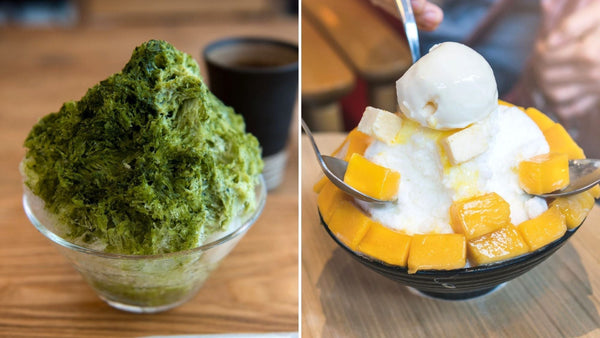
Ever wondered what the difference is between Japanese kakigori and Korean bingsu? Both are popular shaved ice desserts enjoyed during the summer, but they differ in texture, toppings, and cultural style.
Kakigori is known for its light, finely shaved ice and subtle flavors, while bingsu is richer, creamier, and often topped with fruits, red beans, and other indulgent ingredients. Although they share a similar base, each dessert reflects the unique food culture of its country.
Read on to explore the key differences between kakigori and bingsu, from how they’re made and what sets their textures apart, to how their histories shaped two very different dessert cultures.
What is Kakigori?

Kakigori is a traditional Japanese shaved ice dessert made by finely shaving blocks of ice and flavoring them with syrups, fruits, and condensed milk. The texture is light, fluffy, and snow-like, designed to melt smoothly in the mouth.
Unlike simple ice desserts, kakigori is considered a craft dessert in Japan, where the quality of ice and precision of shaving significantly affect the final experience.
Brief History of Kakigori
Kakigori has a long history in Japan, dating back over a thousand years. In its earliest form, ice was a rare and valuable resource. It was carefully harvested during winter, stored in natural ice chambers, and transported to the imperial court for elite consumption.
During the Heian period, kakigori was enjoyed exclusively by aristocrats, as natural ice was extremely difficult to preserve. Historical records such as The Pillow Book describe shaved ice served with sweet plant-based syrups as a refined delicacy.
From the Meiji period onward, advancements in ice-making and refrigeration made kakigori more accessible to the public. Ice-shaving machines and commercial ice production allowed it to become a common summer treat across Japan.
How Kakigori Is Made and Flavored
At the artisanal end, ice is shaved to order using a hand-cranked machine or a professional precision ice shaver. Its razor-sharp blade produces soft, paper-thin flakes that absorb syrup beautifully instead of leaving it pooled at the bottom, creating the signature melt-in-your-mouth texture of premium kakigori.
Kakigori starts with the ice, and the quality of the ice determines what comes after. Clear ice signals high quality. When water freezes slowly and uniformly, molecules arrange into larger crystals with fewer air bubbles and impurities.
This is not just about cosmetic appearances either. Smaller crystals produce a rougher surface when shaved, which cannot achieve the melt-in-the-mouth texture kakigori demands. Harder ice shaves more cleanly and holds longer without melting.
Kakigori Ice Quality & Ice Farms in Japan
The “ice apex” is naturally harvested ice, known as tennenkori. Japan once had nearly 100 himuro (open-air ice farms) by the early Showa period, but today only around five traditional producers remain.
Three of Japan’s remaining natural ice farms are located in Nikko, Tochigi Prefecture: Shogetsu Himuro, Yondaime Tokujiro, and Mitsuboshi Himuro, all known for producing high-quality natural ice using traditional methods. Another famous producer is Asami Reizo in Chichibu, Saitama Prefecture, which is renowned for its fluffy natural ice kakigori. The fifth producer is Karuizawa Natural Ice Producer located in Karuizawa, Nagano Prefecture.

These ice farms create natural ice by slowly freezing pure spring water outdoors during the cold winter months, then storing it in traditional ice houses. This careful process creates the delicate, soft texture that makes Japanese kakigori so unique.
Their ice blocks are supplied to high-end shaved ice shops, including those in Tokyo’s trendiest districts, where the premium quality often comes with a higher price and longer queues. At the artisanal end, the ice is shaved to order using hand-cranked or precision electric blades, producing soft, layered flakes that absorb syrup beautifully instead of leaving it pooled at the bottom.
Kakigori Flavors
Housemade syrups such as slow-steeped gyokuro (shade-grown green tea), reduced kuromitsu (black sugar molasses), or fresh-pressed yuzu are applied in stages between layers.
Toppings like shiroan (white bean paste) or condensed milk are often buried within the ice as a flavor bomb. Mid-range shops use seasonal fruit purées and fruit syrups, while festival stalls rely on bottled concentrates.
Now that you know what makes authentic kakigori so special, why not make it yourself? Our easy mango & watermelon kakigori recipe walks you through creating light, fluffy Japanese shaved ice at home using fresh ingredients and simple techniques.
How Much is Kakigori?
Price varies depending on quality and preparation, with festival stalls at ¥300–¥500 (about $2–$3.50 USD), specialty shops at ¥800–¥1,500 (about $5.50–$10.50 USD), and premium natural ice versions ranging from ¥1,500 to ¥5,000+ (about $10.50–$35+ USD). Higher prices typically reflect better ice quality, handmade syrups, and more artisanal preparation methods.
What Is Bingsu?

Bingsu is a Korean shaved ice dessert made with finely shaved milk-based ice and topped with fruits, syrups, red bean paste, and various sweet ingredients. Unlike kakigori, bingsu focuses more on toppings and visual richness than ice purity.
Modern bingsu is often served in large portions designed for sharing, making it both a dessert and a social experience.
Brief History of Bingsu
Bingsu started to appear as a popular street food in Korea around the early 20th century. It was simply shaved ice piled into a bowl with strawberry syrup and assorted fruit syrups on top.
During the Korean War, condensed milk entered the market, making a perfect fit for the dessert. From the 1980s, bingsu moved away from street vendors and began appearing in bakeries and sit-down cafes with traditional red bean paste (pat) and sticky rice mochi as the standard offering. This was the ‘reinnovation’ of patbingsu.
Modern bingsu, however, was transformed by the Sulbing brand. In 2013, founder Jung Sun-hee launched her Injeolmi Sulbing which was a milk-based snow ice topped with rice cake dusted in roasted soybean powder. This, in itself, redefined what a bingsu could be.
How Bingsu Is Made and Flavored
Bingsu uses a soft, milk-based ice that is shaved into fine, powder-like snow. This creates a creamy texture rather than a crisp ice texture.
Bingsu is all about toppings, often quite lavish, rather than the purity of ice. It is, afterall, a ‘snow ice’ dessert more than a shaved ice dessert.
You pay more for versions using fresh seasonal fruit, especially Jeju apple mango which is prized for its sweetness and low acidity. Toppings are piled directly onto the milk-ice base, with house-made compotes or flavored jellies layered beneath.
Traditional toppings like injeolmi (rice cake dusted in roasted soybean powder) add an earthy, nutty contrast to the sweet snow ice. At the simpler end, fruit purées and pre-sweetened red beans are the standard, with condensed milk drizzled over the top as the primary sweetener.
How Much is Bingsu?
The price spread in Korean for bingsu is unusually dramatic, even by dessert standards. Seoul's luxury hotel bingsu has become a cultural phenomenon in what Korean media calls the "apple mango bingsu wars." The majority of hotel bingsu customers are non-guests who reserve in advance specifically for the experience.
 Reportedly, the most expensive versions in 2026 include luxury hotel creations such as InterContinental Grand Seoul Parnas’s bingsu at 150,000 won (about $115 USD), and Signiel Seoul’s bingsu at 130,000 won (about $100 USD).

Overall, bingsu prices vary widely depending on where you buy it. Convenience stores and street stalls offer simple cup bingsu for around 2,000 won (about $1.50 USD) with basic toppings. Mid-range café chains such as Sulbing typically charge about 8,000–15,000 won (about $6–$12 USD) per bowl.
Kakigori vs. Bingsu: Key Differences
Kakigori is built on restraint and craftsmanship. The quality of the ice, its clarity, hardness, and purity, determines everything that follows. Syrups are layered between delicate flakes as the ice is shaved, with toppings often tucked inside rather than piled on top.
The kakigori of today is the culmination of centuries of Japanese food craftsmanship. Japan's five remaining traditional ice farms continue this legacy, making every bowl something to be quietly appreciated.
Bingsu is louder, softer, and creamier than kakigori. Rather than subtle layers, its identity sits on top with generous toppings like mango, injeolmi, jelly, cheese, or even gold leaf. It's a vibrant dessert designed to be shared, photographed, and talked about.
The two desserts also reflect different philosophies. Kakigori remains rooted in seasonality and craft, while bingsu embraces abundance and indulgence.
In my opinion, kakigori needs none of this, it is quietly confident in the tradition it preserves.
Final Thoughts
Whether you would like to enjoy a kakigori more or a bingsu depends largely on where you are and what’s practically available. You would be hard pressed to find a kakigori shop in Seoul, although kakigori may appear on the menu of select Japanese restaurants. In Japan, bingsu shops have made an appearance in Tokyo with Cafe BingGo in Shin-Okubo and Sulbing Café in Harajuku, among a few other possible places.
Cafe BingGo has had a shop along the Dotonburi in Osaka since 2022. In the United States, and especially in Los Angeles, bingsu has a well-established presence while kakigori is a lot harder to find.
If you’re looking for a dessert that elevates ice to an art form, then go for kakigori. A kakigori is also something you can quietly enjoy by yourself, with a close friend, or even a small group. Since good quality ice lasts longer, you can also take your time. There are of course plenty of kakigori shops to choose from in Japan.
Eating a bingsu alone may seem a little indulgent, but completely possible. Bingsu is a lot richer, sweeter, and heavily laden with various fruits, beans and other toppings. A kakigori could easily fit into the end of a meal, but a bingsu is probably best had somewhere in between.


0 comments