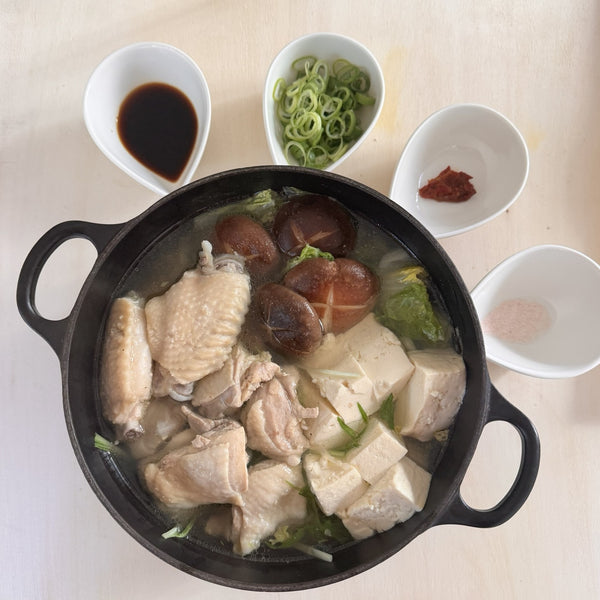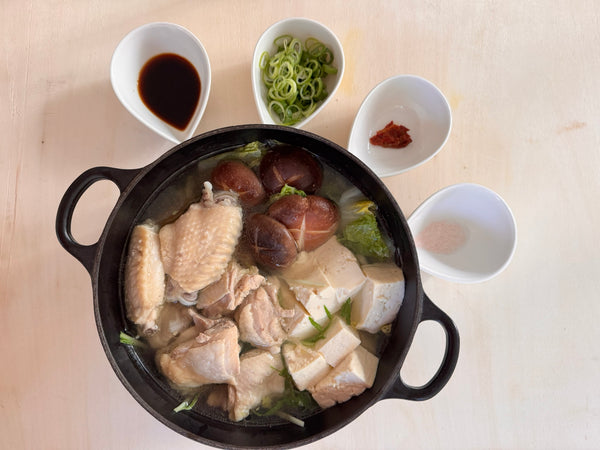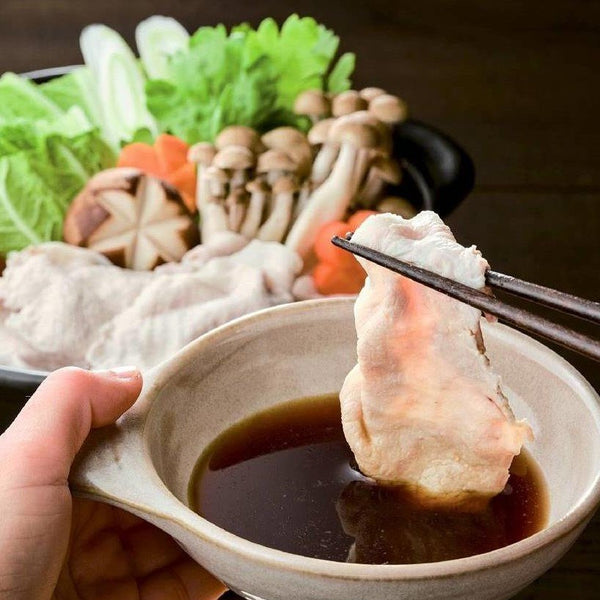
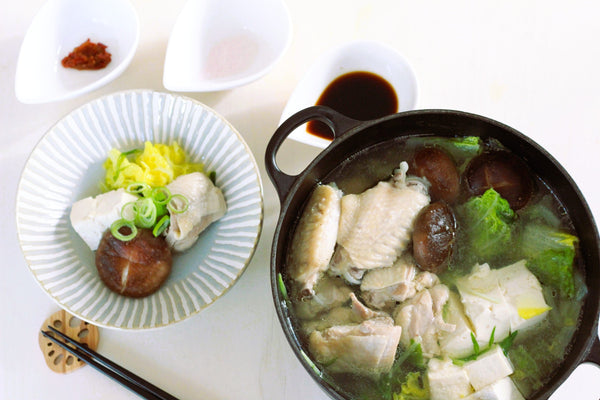
Mizutaki is a traditional Fukuoka chicken hot pot featuring a clear, collagen-rich broth. Simmered slowly in plain water, the chicken releases natural umami and gelatin, creating a simple, comforting dish perfect for cold-weather or year-round meals.
Why You’ll Love This Recipe
This version follows traditional Fukuoka-style preparation. The broth remains unseasoned during cooking, and no shortcuts such as instant stock are used. The focus is on blanching the bones, controlling the simmer, and skimming carefully to achieve a refined, clear soup. Many modern recipes add salt or soy sauce early. This recipe avoids that. Instead, flavor balance comes from dipping sauces at the table.
Key Ingredients
Mizutaki requires minimal ingredients, but quality matters.
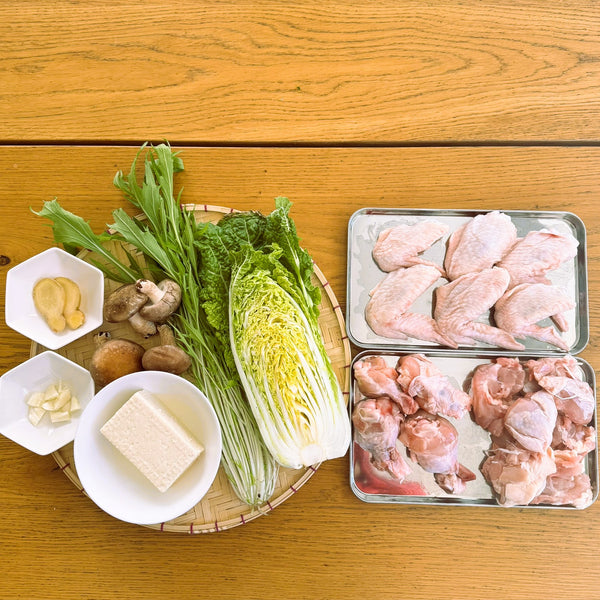
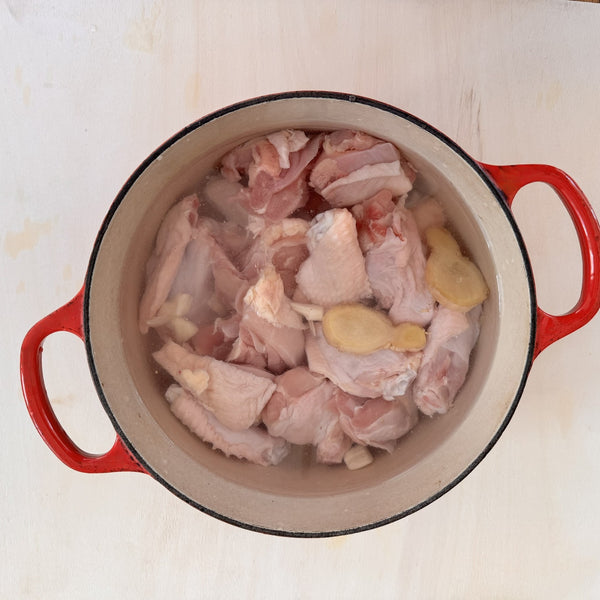
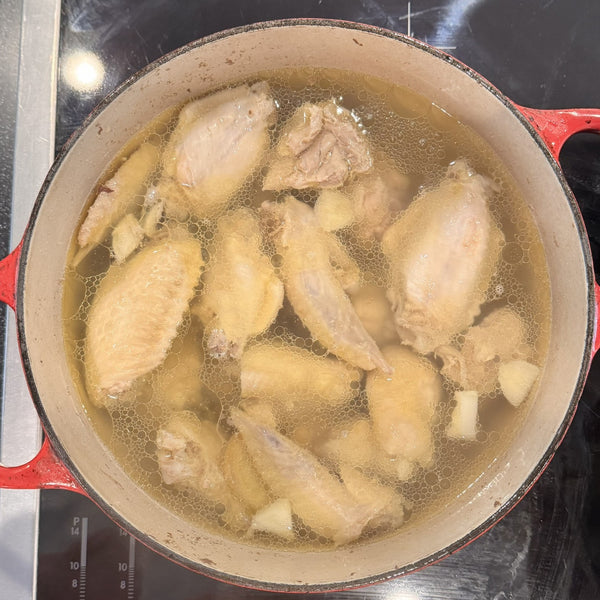
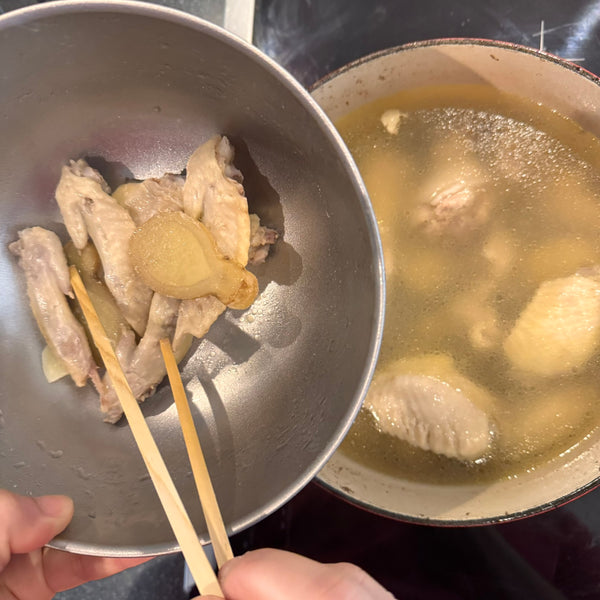
- Main Ingredient 1 – Bone-in Chicken Thighs and Wings: Bone-in cuts are essential for depth. Wings provide gelatin, which gives the broth body and a slightly milky appearance after long simmering.
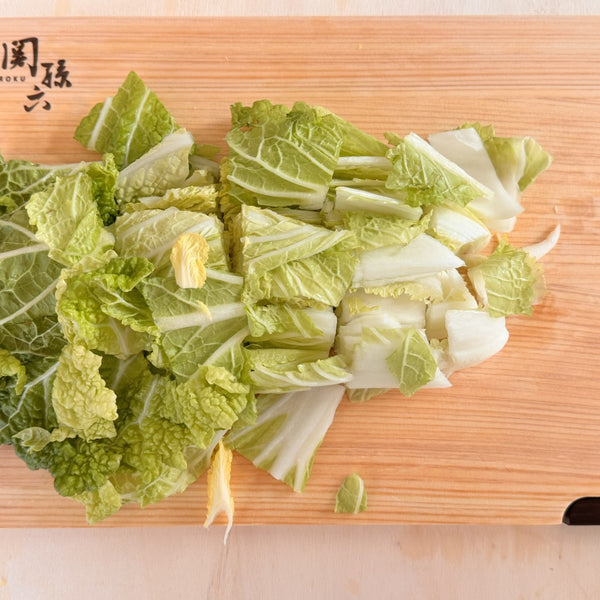
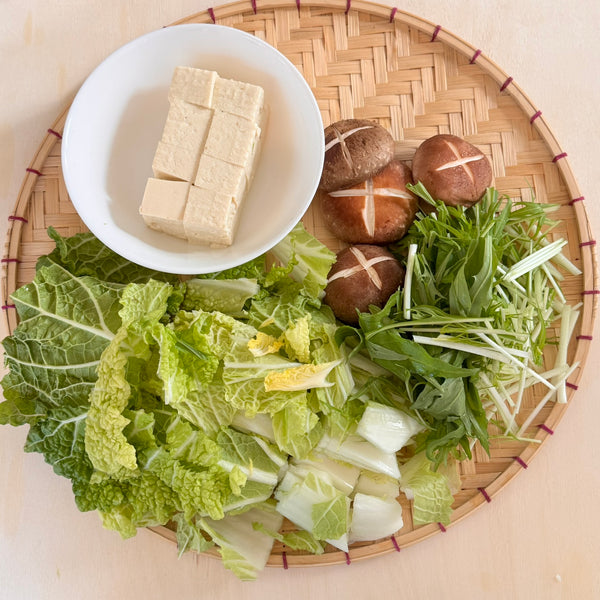
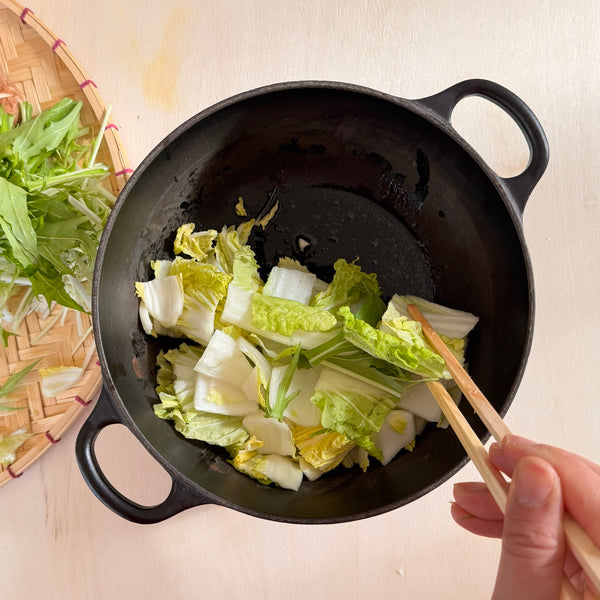
- Main Ingredient 2 – Napa Cabbage: Napa cabbage softens gently and absorbs chicken flavor while adding natural sweetness.
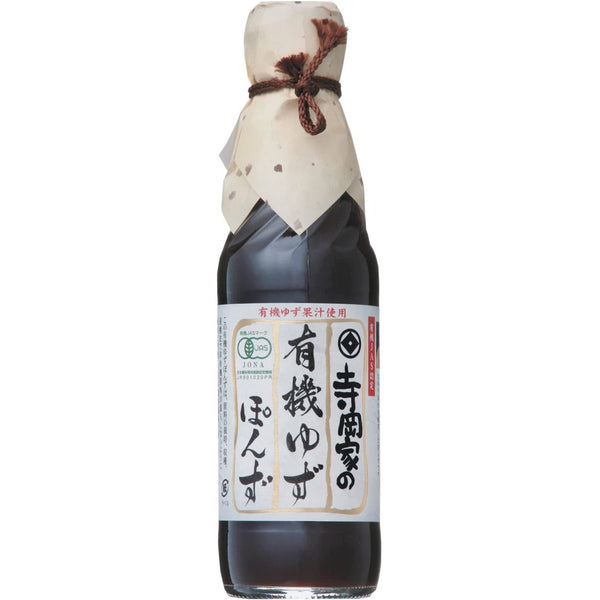
- Seasoning or Special Ingredient – Ponzu Sauce: Ponzu provides acidity and brightness. Because the broth is pure, ponzu creates contrast and balance.
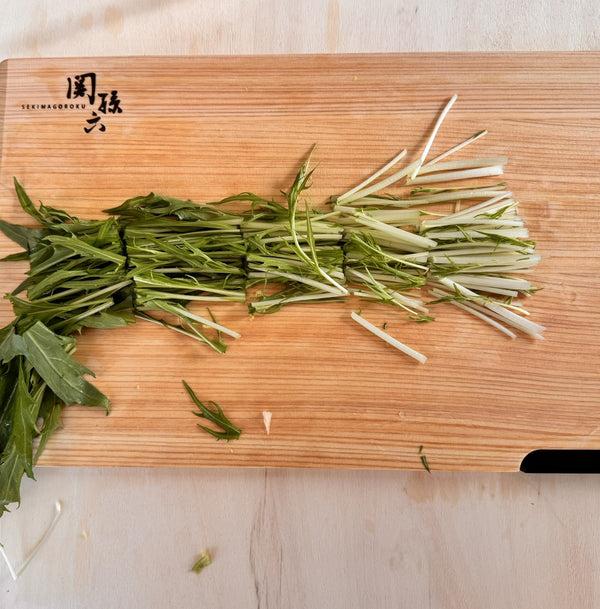
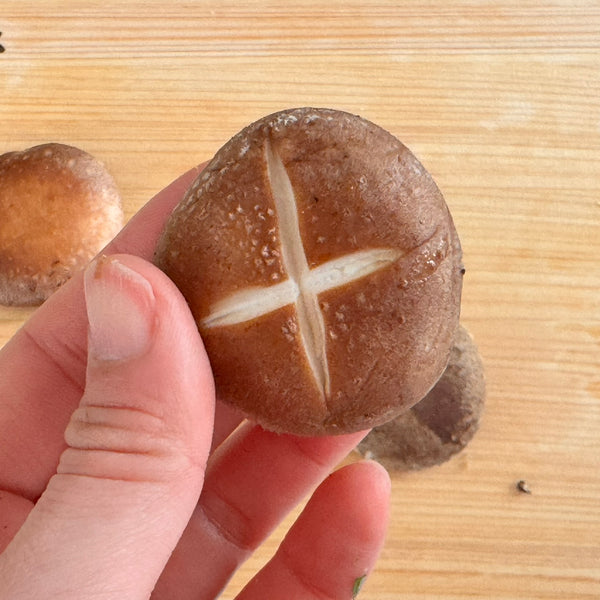
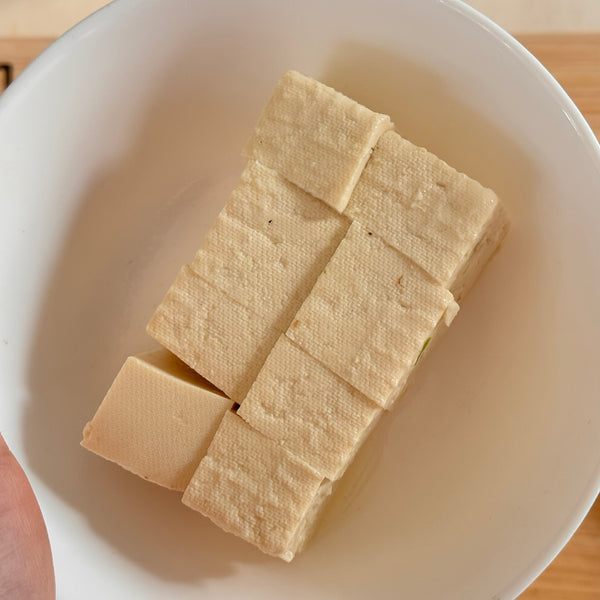
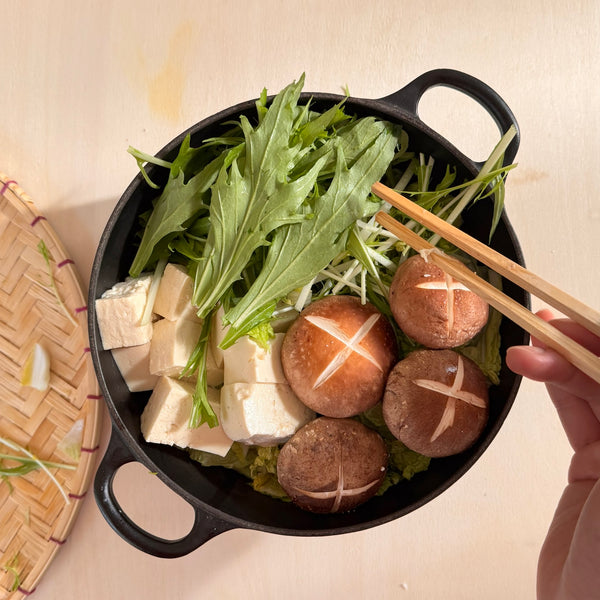
Other vegetables may include negi (Japanese long onion), shiitake mushrooms, enoki mushrooms, tofu, and leafy greens.
Helpful Tools
- Heavy-Bottomed Pot or Donabe: A thick pot ensures stable heat and prevents aggressive boiling.
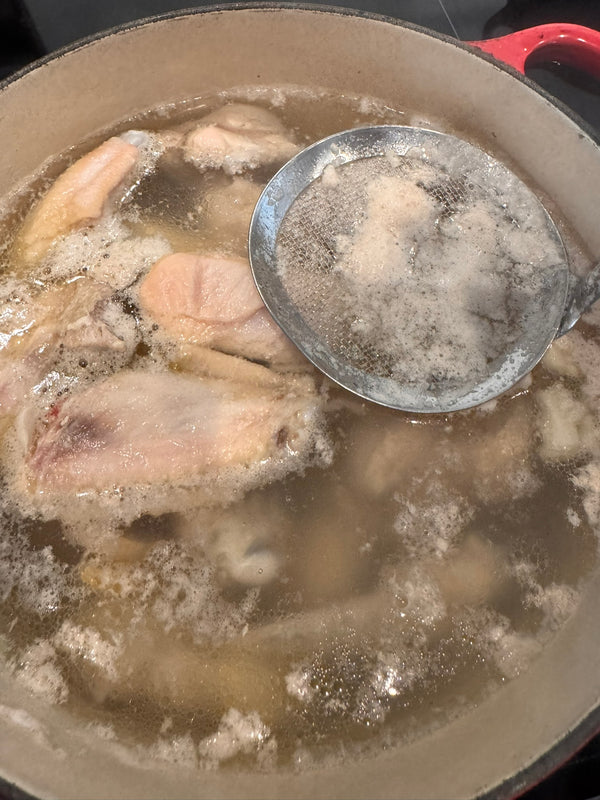
- Fine Mesh Skimmer: Essential for removing foam and impurities.
- Portable Table Burner (Optional): for traditional table-side cooking.
Cooking Tips & Best Practices
- Use Fresh, High-Quality Chicken – The broth’s flavor depends entirely on the chicken, so start with the best ingredients.
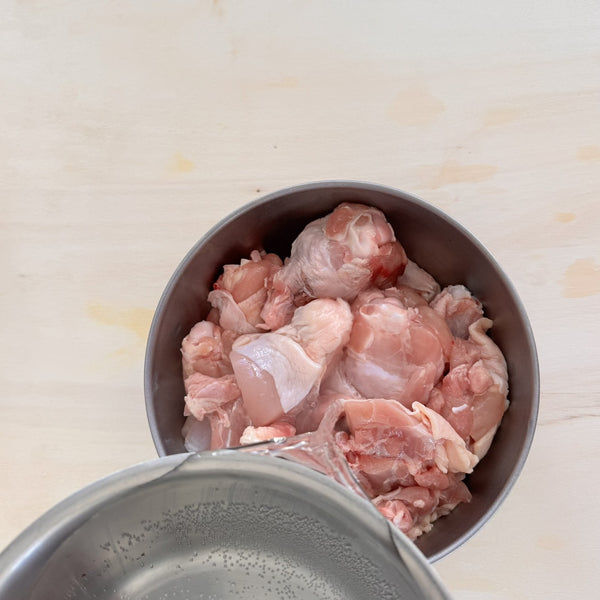
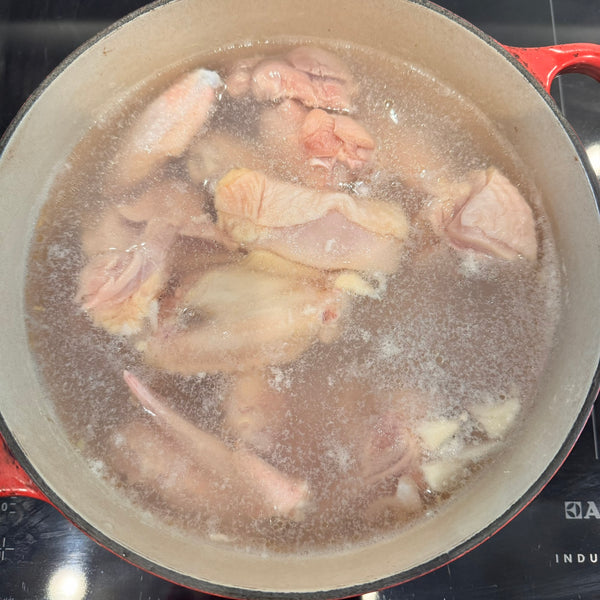
- Blanch the Bones First – Briefly boil the chicken bones, then rinse. This removes impurities and keeps the broth clear.
- Keep the Simmer Gentle – Place chicken and bones in cold water and maintain a low, steady heat. Avoid rapid boiling to preserve clarity and texture.
- Skim Frequently – Foam will rise during the first 15–20 minutes. Remove it carefully with a skimmer to ensure a clean, clear broth.
- Do Not Season Early – Keep the broth unseasoned. Authentic mizutaki relies on dipping sauces for flavor.
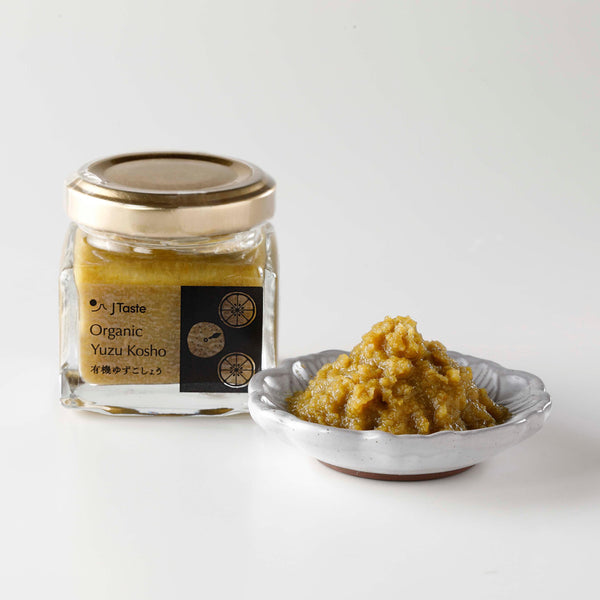
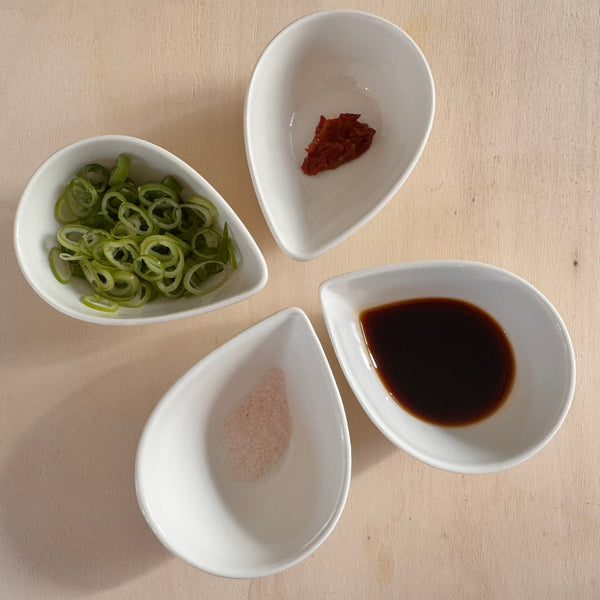
- Pair Properly – Complement the dish with fresh ponzu, grated daikon, and chopped green onions for balance and brightness. Yuzu Kosho citrus chili paste adds subtle heat and aroma. Use sparingly for extra complexity.
- Serve Immediately – Once vegetables are tender, serve the hot pot right away to preserve texture and freshness.
Serving Suggestions & Variations
You can adjust ingredients slightly without losing authenticity. Add kombu at the beginning for mild umami. Substitute drumettes for wings if needed. Add chrysanthemum greens for a slight bitterness.
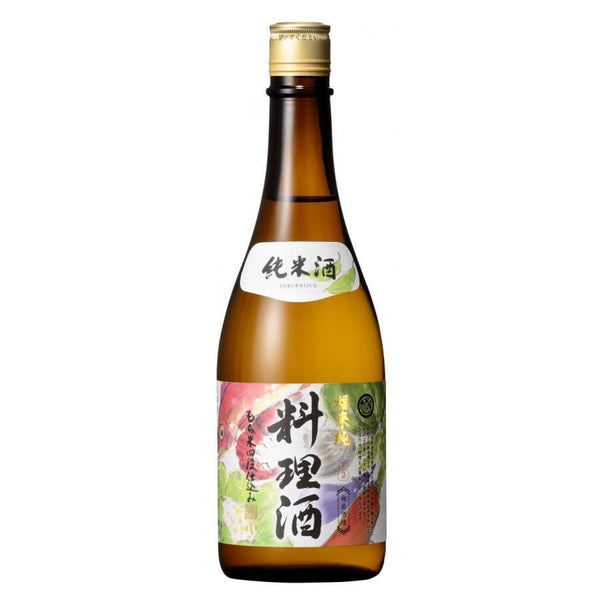
Serve with steamed rice and warm sake. Choose a junmai or honjozo sake with gentle acidity. Heat sake slowly in a hot water bath rather than directly on the stove to preserve aroma. Aim for about 40–45°C for the best balance.
At the end of the meal, cook rice in the remaining broth to make zosui, a light porridge that captures concentrated flavor.
Storage Tips
Leftover broth can be strained and stored in the refrigerator for up to two days. Reheat gently without boiling. The gelatin-rich soup may solidify when cold. This is normal and a sign of a successful mizutaki recipe.
If you enjoy mizutaki, you may also like:
- Sukiyaki (Kanto-Style) – Simmered in a pre-mixed warishita sauce.
- Sukiyaki (Kansai-Style) – Beef is seared first, then sugar and soy sauce are added directly to the pan.
- Shabu-Shabu – A lighter hot pot with thinly sliced meat.
- Kimchi Gyoza Nabe – Spicy hot pot made with kimchi, dumplings, and vegetables simmered in a savory broth
- Chanko Nabe (Sumo Stew Recipe) – A protein-rich hot pot traditionally eaten by sumo wrestlers.
Instructions
1) Gather the Ingredients
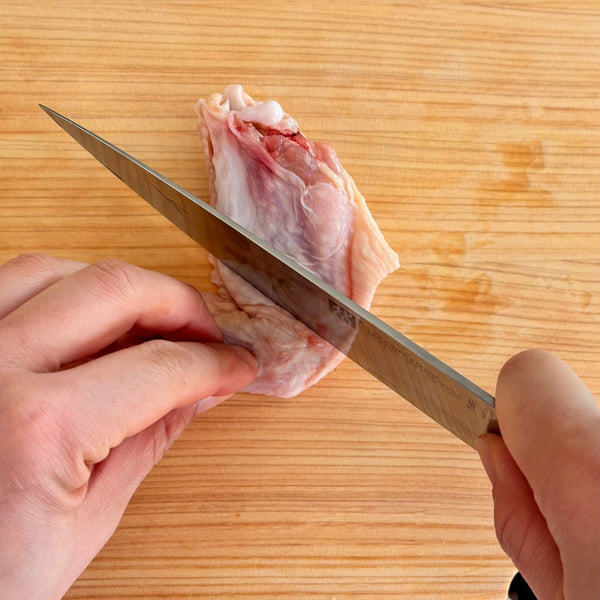
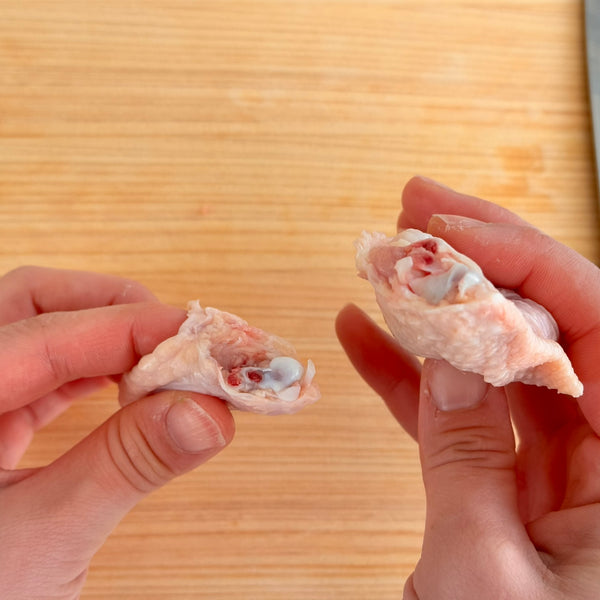
2) Prepare the Chicken for Mizutaki
Expert's Tip
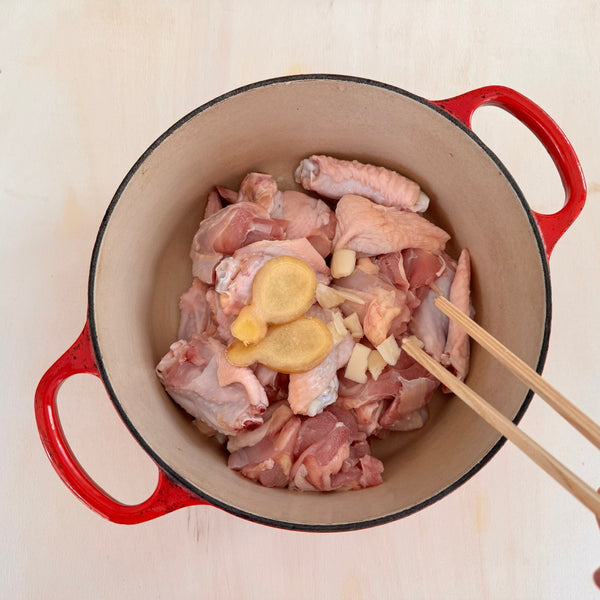
3) Make the Broth/Boil the Chicken
4) Prepare the Vegetables
5) Adjust & Finish the Broth
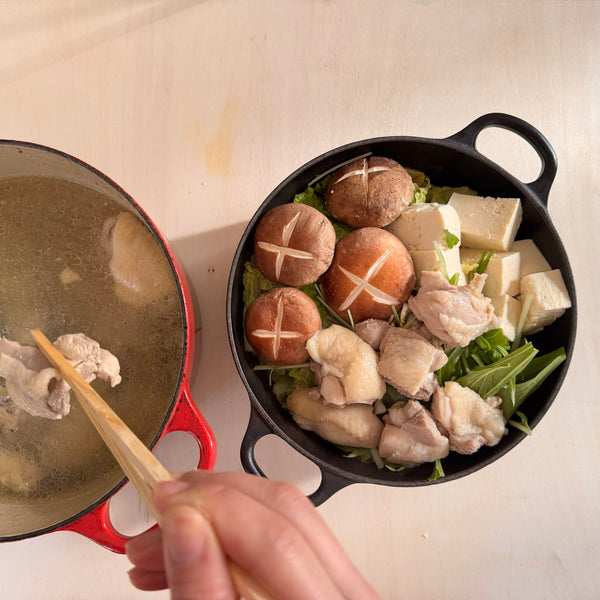
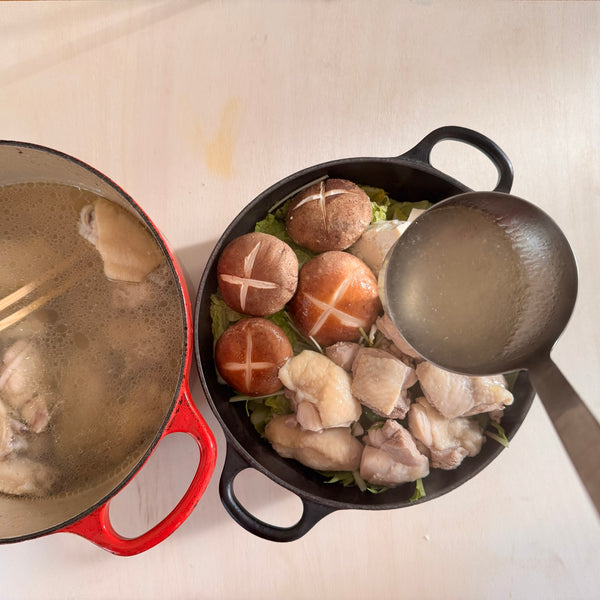
6) Assemble & Cook Mizutaki
7) Prepare Condiments & Dipping Sauces
8) Serve & Enjoy!