
Jump to:
Switzerland. Belgium. France.
All chocolate powerhouses of the world, by reputation, certainly.
But what about Japan?
Japanese chocolate is easy to underestimate until you start paying attention to how people in Japan actually produce and share these sweet treats, especially in February.
Why February? Why, Valentine’s Day, of course!
To understand why chocolate holds this kind of cultural weight, you have to look at how it evolved here.
Brief History of Chocolate in Japan
Chocolate was introduced to Japan in the late 18th century, during the Edo period, through trade with the Dutch in Nagasaki. Back then, chocolate was not a commercial product. It was Rare, imported, and extremely expensive.
Chocolate became more accessible during the Meiji era (1868–1912), when Japan opened itself to Western influence and tastes. The real turning point came in 1918, when Morinaga began mass-producing milk chocolate. This made chocolate affordable to a wider public and marked the beginning of Japan’s modern chocolate industry.

Interestingly, early marketing campaigns reflected chocolate’s appeal as both a treat and a functional product. In a newspaper advert published in February 1926, Morinaga claimed:
“During the sweet season, if you eat chocolate for nutrition when cold you will not feel cold or tired but lively and happy, and this will increase your work efficiency.”
About six months later, another advert from Meiji showed a smartly dressed gentleman being encouraged to incorporate chocolate into his work routine:
“Make a change. Eat one for mental refreshment. Eat two for energy replenishment. Eat three for efficiency increase.”
These adverts positioned chocolate as a product that could boost both mood and productivity, particularly for office workers.
In the decades that followed, companies such as Meiji, Lotte, and Glico expanded the market, adapting Western chocolate-making techniques to suit Japanese preferences for smoother texture and balanced sweetness.
After World War II, as Japan’s economy recovered, chocolate consumption steadily increased. By the 1960s and 1970s, it had become a common snack, especially among children.
Today, Japan is one of the world’s largest chocolate markets. Valentine’s Day alone accounts for around 23% of annual chocolate sales, with department stores selling thousands of varieties and generating billions of yen during the season.
Why Japanese Chocolate Is Different: Japanese Chocolate vs Western

Japanese chocolate differs from Western chocolate, especially American brands, in ways that become obvious once you start tasting side by side.
It is generally less sugary, creamier in texture, and far more experimental with flavor combinations.
That difference comes down to several factors.
Texture
Japanese milk chocolates are renowned for being extremely smooth and creamy. Brands like Meiji and Lotte often use high-quality ingredients, including Hokkaido milk, to create that rich but light texture.
Cleaner Finish
The “sharper edge” in some Western chocolate often refers to acidic, bitter, or slightly waxy notes. In some cases, this comes from specific processing methods that leave behind butyric acid, which is common in certain US chocolates.
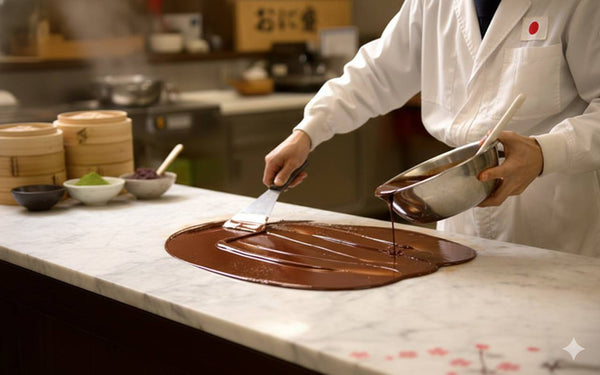
Japanese manufacturers usually avoid this through meticulous, long-duration conching. Conching is a kneading process that smooths the chocolate and mellows the flavor. The result is a softer texture and a cleaner finish without harsh aftertastes.
Some companies even use specialized production techniques. For example, Morinaga’s “CCX” method was developed to create an especially smooth and rich milk chocolate designed for more delicate palates.
Balanced Flavor
Rather than relying mainly on sugar, Japanese chocolate focuses on balance and subtle complexity.
Sweet, but not overwhelming. Rich, but not heavy.
Japan is especially famous for transforming chocolate, particularly KitKats, into a platform for experimentation. Over the years, there have been hundreds of Kitkat flavors, often tied to specific regions or seasons.
Some combinations lean playful or even savory. Wasabi, pizza, hojicha, sake, Beni Imo purple sweet potato, melon, nd many more unique flavors!
Seasonality
Japanese chocolate is also designed around climate and experience.
Products like “Meltykiss” are truffle-like, winter-limited seasonal chocolates with a melt-in-your-mouth texture.
In a nutshell, while some lower-end mass-produced Japanese candy can be mild or slightly waxy, the general reputation of Japanese chocolate is that it offers a high-quality, refined, and consistently smooth experience.
Chocolate Culture in Japan

In Japan, chocolate is one of the most common small gifts. People share it at work, bring it as a casual thank you and use it as a simple celebration item.
This is especially true around Valentine’s Day and White Day, where chocolate becomes a cultural signal as much as a sweet.
Valentine’s Day in Japan is as synonymous with chocolate as Christmas is with fried chicken. Chocolate given on Valentine’s Day usually falls into two main categories: giri choco and honmei choco.
Giri choco is obligation chocolate. A polite, social gesture. Something shared with coworkers, classmates, or acquaintances as a small seasonal thank you.
Honmei choco is different. It is chocolate given with genuine romantic intention. More personal. More thoughtful. Sometimes handmade. Sometimes carefully selected.
Those categories shape how chocolate is bought, packaged, and even priced during Valentine’s season.
For gift buying, many people reach for polished premium brands. Royce is famous for nama chocolate, a soft, truffle-like square with a rich texture. Lindt is also widely used for gift boxes and seasonal assortments (looking at some Lindor bonbons on the kitchen counter right now as we speak, still here from Xmas / New Year’s).
These are excellent gift options, especially when presentation matters.
Japanese Chocolates You Should Try!

Here are our top picks for Japanese chocolates. You can never go wrong with these if you want to try Japanese chocolate.
- Meiji Milk Chocolate – Best Classic Japanese Chocolate
- Glico Pocky Original – Best Crispy Chocolate Snack
- Kit Kat Chocolate Bars – Best Mini Travel Chocolate
- Lotte Choco Pie – Best Marshmallow Chocolate
- Morinaga DARS Chocolate – Best Melt-in-the-Mouth Chocolate
- Fujiya Milky Chocolate – Best Chewy Milky Chocolate
- Royce’ Potato Chip Chocolate – Best Sweet & Salty Chocolate
- Muji White Chocolate Covered Strawberries – Best Tart-Sweet Treat
- Yuraku Black Thunder – Best Crunchy Chocolate Bar
- Bourbon Alfort Mini Chocolate Biscuits – Best Chocolate with Biscuit
Bonus: Meltykiss Premium Chocolate Melting Choco Cubes - Best seasonal treat (winter-only)
And more! Check our list for the best Japanese chocolate brands and other must-try products! Want the full snack experience? Visit our Ultimate Japanese snacks guide to explore 50+ must-try treats!
FAQs on Japanese Chocolates
What is the most famous chocolate in Japan?
One of the most famous chocolates in Japan is Meiji Milk Chocolate, a long-standing classic that has been popular for generations.
Other iconic names include Pocky, Black Thunder, Alfort, and Japan’s many regional KitKat flavors.
Why does Japanese chocolate taste different?
Japanese chocolate generally tastes less sugary, creamier, and more balanced than many Western chocolates, especially American brands. Japanese manufacturers focus on smooth texture, subtle sweetness, and clean flavor.
Why is Japanese chocolate so smooth?
Japanese chocolate is known for its smooth texture because of careful production methods, including long conching (a kneading process that refines texture and flavor).
Many brands also use high-quality milk, such as Hokkaido milk, to create a creamy mouthfeel that melts easily and leaves a clean, mild finish without sharp or acidic aftertastes.
Are there any rules for giving Honmei choco?
There are no official rules, but there are clear social expectations. Honmei choco is meant to express genuine romantic feelings, so it is usually more thoughtful and intentional than giri choco. The chocolate is often higher quality, more carefully packaged, or even handmade.
Shop Iconic Japanese Chocolate Favorites!
If you are not sure where to start, try the classics! Try Meiji Milk Chocolate bar for a smooth, balanced taste. Morinaga's Dars chocolate for its signature rich, creamy, and smooth melt-in-the-mouth texture. Go for Lotte Crunky if you like a crisp texture in every bite. Or reach for Glico Pocky sticks when you want an everyday chocolate snack that’s easy to share!
Do you have more questions about Japanese chocolate or a favorite to recommend? Let us know in the comments below!


0 comments